

Why Do Blowers Consume 60% Power in STPs ETPs? | Quick Engineering Insight

In most Sewage Treatment Plants (STPs) and Effluent Treatment Plants (ETPs), aeration blowers are the single largest energy‑consuming equipment, often accounting for 60% or more of total power usage. Understanding why this happens helps plant owners optimize energy, reduce OPEX, and improve treatment efficiency.
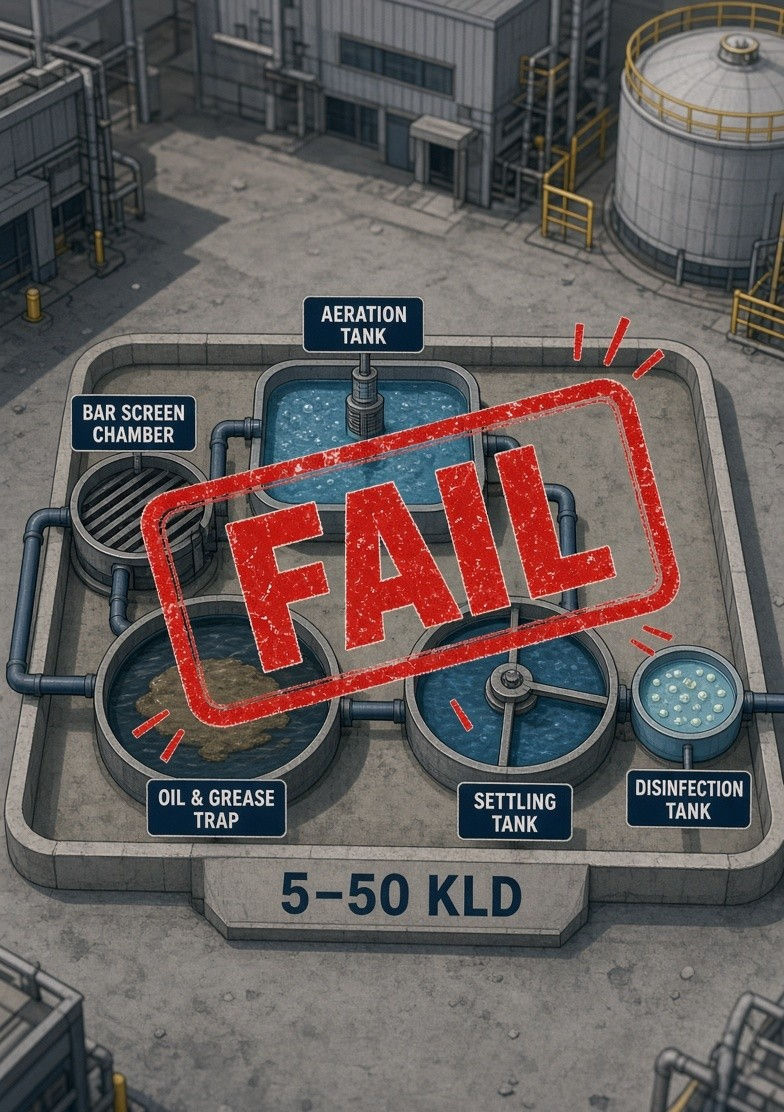
1. The Real Reason: Oxygen Demand Drives Everything
Biological treatment requires continuous oxygen transfer to keep microorganisms alive. To meet this demand, blowers must:
Run 24×7
Deliver high airflow
Overcome diffuser backpressure
Maintain stable DO levels (2–3 mg/L)
This combination makes aeration the most energy‑intensive process in wastewater treatment.
2. Power Distribution in a Typical STP
Equipment | Typical Power Share |
Aeration Blowers | 55–60% |
Pumps (Feed, Return, Sludge) | 15–20% |
Decanter / Clarifier | 5–10% |
Mixers & Agitators | 5–8% |
Other Utilities | 5–10% |
Blowers dominate because oxygen transfer is a continuous, high-load process, unlike pumps or mixers that operate intermittently.
3. Why Blowers Need So Much Energy
Factor | Impact on Power Consumption |
High Oxygen Demand | More airflow → more kW |
Diffuser Pressure Drop | Higher pressure → higher blower load |
Continuous Operation | No downtime → high daily kWh |
Inefficient Aeration Design | Poor diffuser layout → wasted air |
Over‑sized Blowers | Extra kW consumed unnecessarily |
Even a 0.1 bar increase in discharge pressure can raise blower power consumption by 7–10%.
4. How to Reduce Blower Power by 20–30%
Use VFD‑controlled blowers
Upgrade to fine‑bubble diffusers
Optimize MLSS & DO control
Reduce air leaks in pipelines
Perform regular diffuser cleaning
These improvements directly reduce OPEX and improve plant stability.
Conclusion
Blowers consume up to 60% of STP/ETP power because aeration is the heart of biological treatment. By optimizing blower selection, diffuser design, and DO control, plants can significantly cut energy costs and improve overall efficiency.


Comments